
Japan Wants Its Savers to Buy Government Bonds, The Timing Explains the Suspicion
by Kenichi Ogura, Former Chief Editor of business magazine “PRESIDENT”
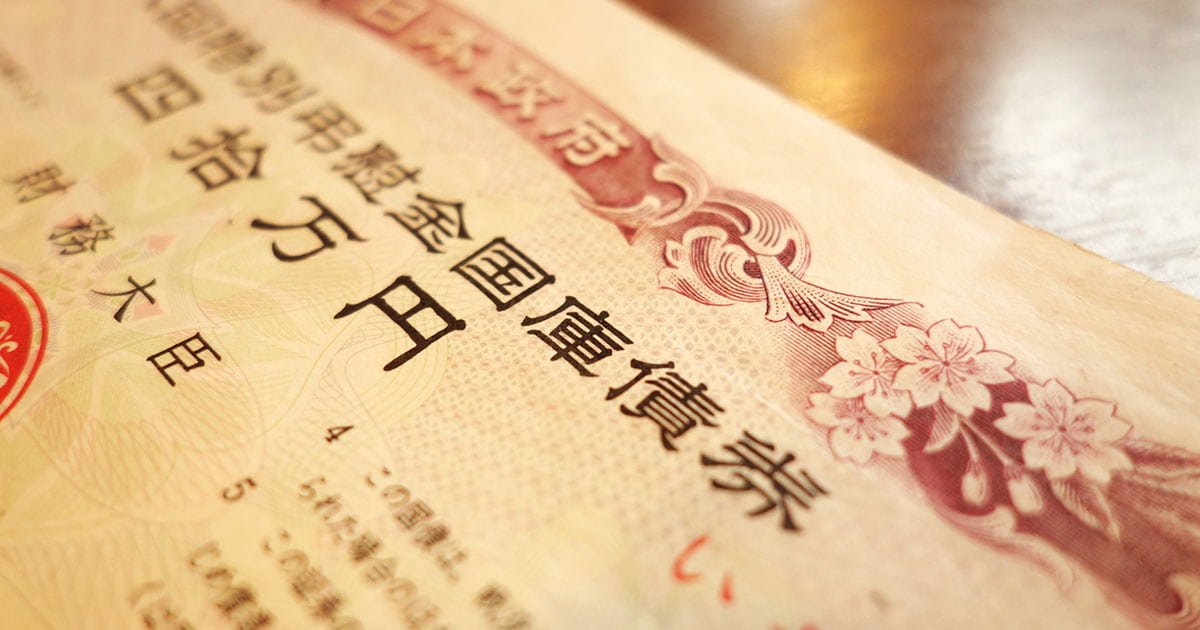
Why now? The government is trying to draw more household money into Japanese government bonds
Japan's proposal to admit government bonds into NISA has met little outright hostility. In the online discussions, the usual response has been pragmatic. NISA is a tax-free investment account; government bonds are an investment product. Savers who want equities could keep buying them, while people who value stability would gain another choice.
The doubts concern timing. The government is trying to draw more household money into Japanese government bonds just as the Bank of Japan is cutting its purchases and market yields are rising.
On July 10, the Democratic Party for the People submitted a bill to add interest and capital gains from government bonds to NISA's tax exemption. It also called for an inheritance-tax exemption for bonds held in NISA accounts, with the details to be worked out later. Four days later, Finance Minister Satsuki Katayama said the idea should be considered and linked it to efforts to make government bonds more attractive to individual investors.
For some households, the proposal has an obvious use. Interest on Japanese government bonds is normally taxed at 20.315%. The retail bonds offered in July paid 1.80% on the floating-rate 10-year issue, 1.95% on the fixed five-year issue and 1.56% on the fixed three-year issue. Those returns are modest, but they are well above ordinary savings-account rates and come with far less volatility than stocks.
That combination will appeal to older and risk-averse savers, especially those holding large cash balances. Younger investors face a different trade-off. NISA's lifetime tax-free holding limit is 18 million yen, with the growth-investment component capped at 12 million yen. Using scarce tax-free capacity for low-return bonds means not using it for equities, which have higher expected returns over long periods.
The choice depends on investment horizon, risk tolerance, liquidity needs and the amount of NISA capacity already used. A bond that makes sense for a retiree may be a poor use of the account for someone in their twenties.
Where the money comes from
The larger economic issue is where the money comes from. Funds transferred from bank deposits would raise the return on household savings without directly reducing equity holdings, although they could affect bank funding. Funds transferred from stocks would move capital from private companies to the government. The policy could mobilize idle cash or displace private investment.
Japan has plenty of cash to target. At the end of March 2026, households held 2,386 trillion yen in financial assets. Cash and deposits accounted for 1,126 trillion yen, while debt securities accounted for only 36 trillion yen. The Democratic Party for the People has suggested that about 10% of household deposits could eventually move into government bonds. There is little basis for treating that figure as a forecast, but it shows the scale of the ambition.
Japan is not simply widening the menu available to savers. It is trying to widen the market for its own debt.
For years, the Bank of Japan dominated the government bond market. Its monthly purchases are now being reduced from about 2.7 trillion yen in April-June 2026 to 2.5 trillion yen in July-September, 2.3 trillion yen in October-December and 2.1 trillion yen in the first quarter of 2027. From April 2027, the planned pace is about 2 trillion yen a month. Other investors must absorb more bonds as the central bank steps back.
They are already demanding better terms. On July 9, the benchmark 10-year JGB yield reached 2.9%, its highest level in roughly 30 years. Inflation, global interest rates and monetary policy all contributed. So did concern about fiscal management and government spending.
Japan is not facing imminent default. Its debt is issued in yen and domestic savings remain large. The immediate problem is that higher yields increase future interest costs and expose the budget more directly to market judgment.
Against that background, tax advantages for household bond buyers look less like an isolated investment reform. They are part of a broader effort to diversify the investor base and sustain demand as the Bank of Japan retreats. That is a defensible objective, but it raises an awkward question: why is the government concentrating on how to sell more debt before deciding which spending should be cut?
The administration has numbers it can cite in its defense. The fiscal 2026 initial budget holds new government bond issuance to 29.6 trillion yen, lowers the bond-dependency ratio to 24.2% and records a 1.3 trillion yen primary surplus in the central government's general account.
Putting bonds into NISA would not automatically increase expenditure
Yet general-account spending has reached 122.3 trillion yen, and the government continues to expand subsidies, strategic investment and state-backed programs across numerous industries. It has identified many fields in which public money should play a larger role, but few major programs it intends to abolish.
Putting bonds into NISA would not automatically increase expenditure, and denying savers access to a useful asset would achieve nothing. The fiscal risk is political. A government confident that household savings can be channeled into its bonds through tax preferences may find it easier to postpone spending reform. Ineffective subsidies survive, social-security changes are delayed and new programs are added because another group of buyers has been cultivated.
The tax privilege also carries a cost. Revenue forgone on bond interest does not disappear; taxpayers still finance debt service through future taxes, spending reductions, inflation or additional borrowing.
Government bonds may deserve a place in NISA. That is separate from the government's duty to explain what the borrowed money will finance, what results it expects and what it will stop funding when those results do not appear. A new sales channel for public debt cannot answer those questions.
Japan's savers are not wrong to welcome the product and distrust the policy at the same time. When a heavily indebted government turns to citizens' tax-free investment accounts for a new class of bond buyers, scrutiny is not hostility to choice. It is the discipline that borrowing demands.
Related Articles
-
PCA, Apr-Jun (1Q) Ordinary Profit Decreases by 31%
Tue Jul 21, 2026 3:30 pm JST Earnings -
THine Electronics, Net Income Forecast for First Half Loss to Narrow, Full Year also Increased
Tue Jul 21, 2026 3:30 pm JST Revision -
TAIHEIYO CEMENT, Net Income Forecast for First Half Revised Upward to an Unexpected 39% Increase, Full Year also Increased
Tue Jul 21, 2026 2:30 pm JST Revision -
Reiwa Accounting, Apr-Jun (1Q) Ordinary Profit Increases by 50%
Tue Jul 21, 2026 11:30 am JST Earnings -
Nikkei 225 open on the 21st = 402 yen higher, 64,544 yen
Tue Jul 21, 2026 9:02 am JST Market -
Weekly forex outlook: Focus shifts to Japan's fiscal policy framework and Middle East tensions
Fri Jul 17, 2026 5:08 pm JST Currency -
BOJ forex rate: dollar at 162.28?162.29 yen as of 5 p.m.
Fri Jul 17, 2026 5:58 pm JST Currency -
Hong Kong Hang Seng Index closes at 24,562.24, down 446.36 points on the 17th
Fri Jul 17, 2026 5:33 pm JST Market -
"Physical AI" holds top spot in popular theme ranking as FUJITSU LIMITED announces collaboration with FANUC, others
Fri Jul 17, 2026 12:21 pm JST Feature -
SEIKOH GIKEN announces 5-for-1 stock split with Aug. 31 record date, joint venture in China
Fri Jul 17, 2026 5:10 pm JST Catalyst